Decide what work you'll do
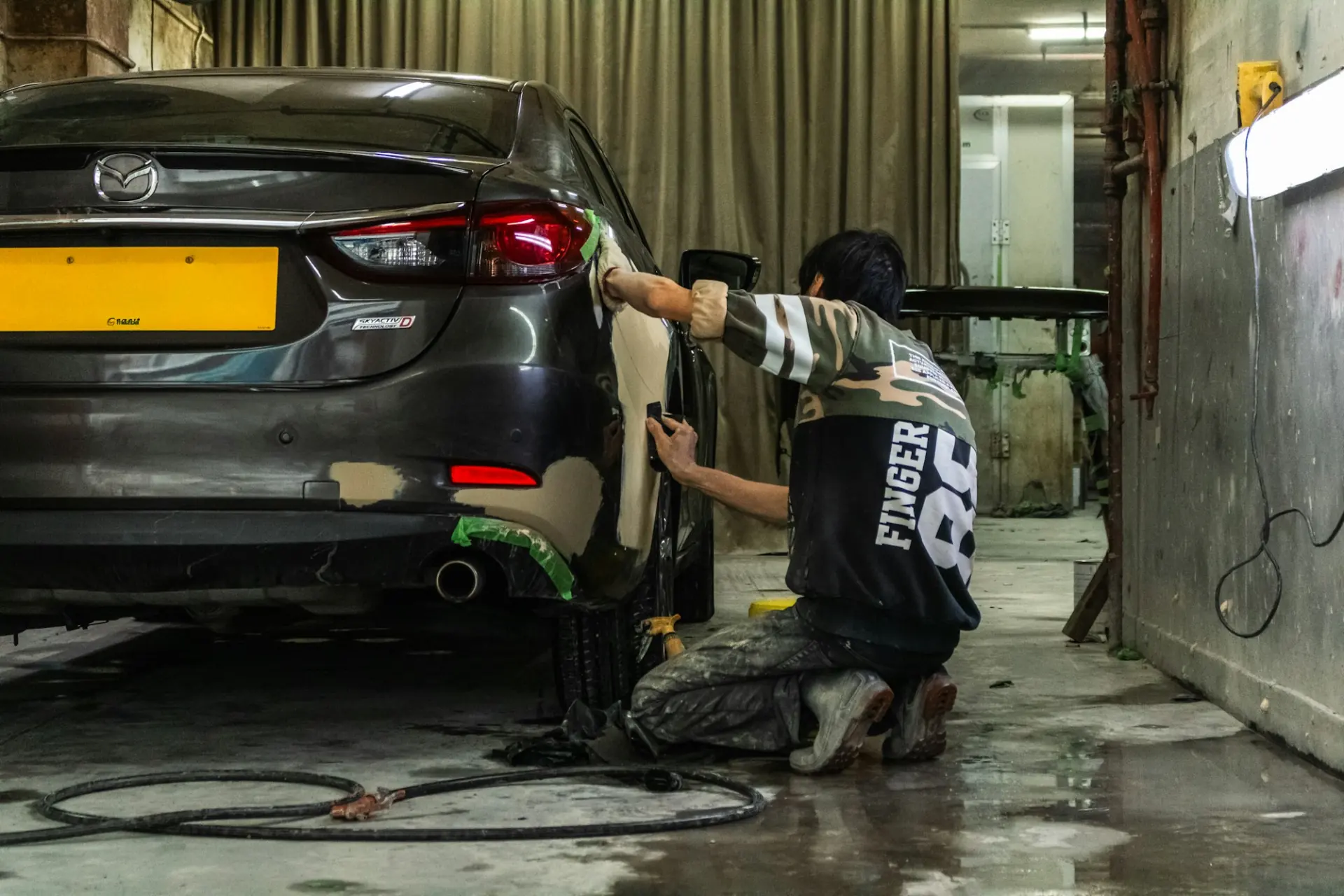
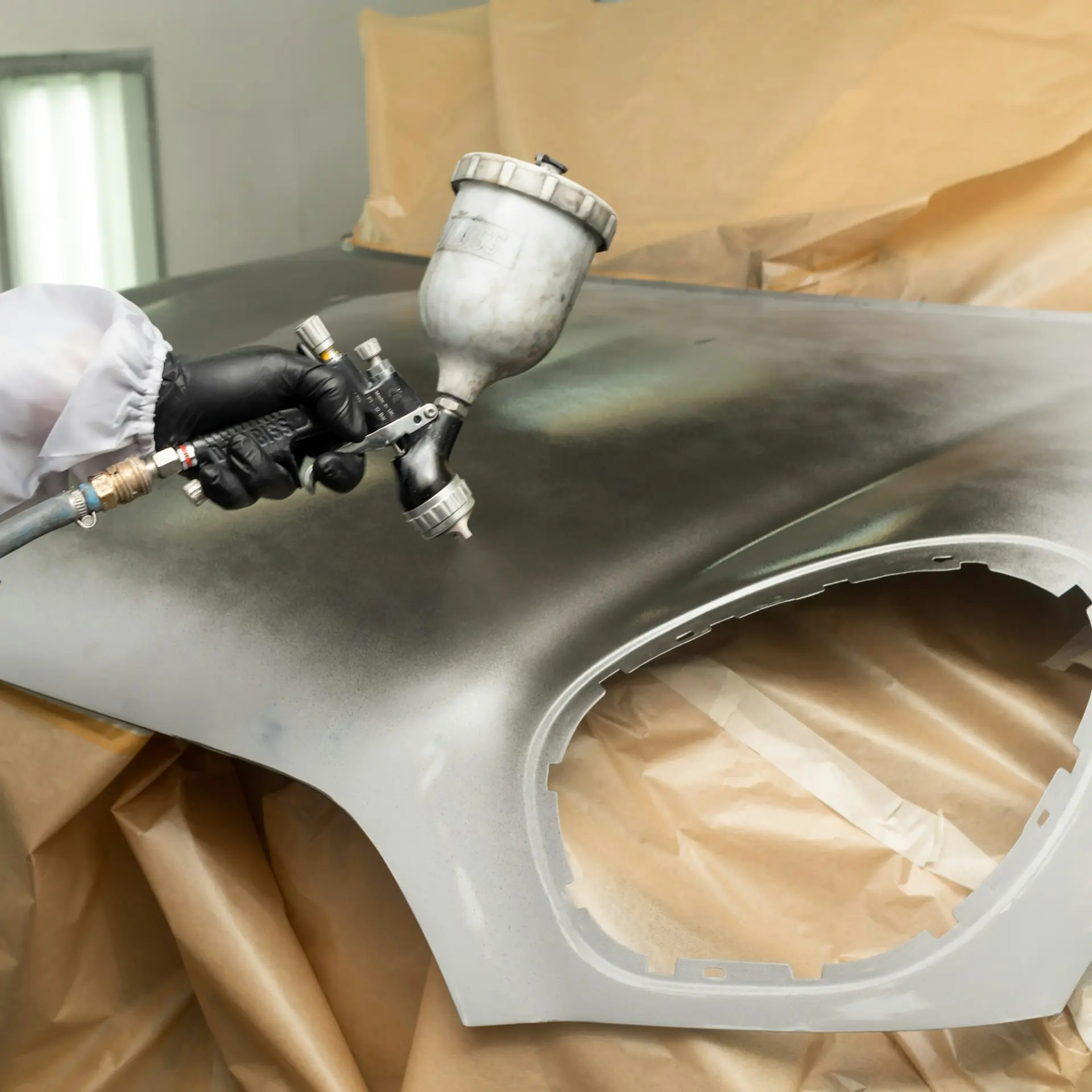
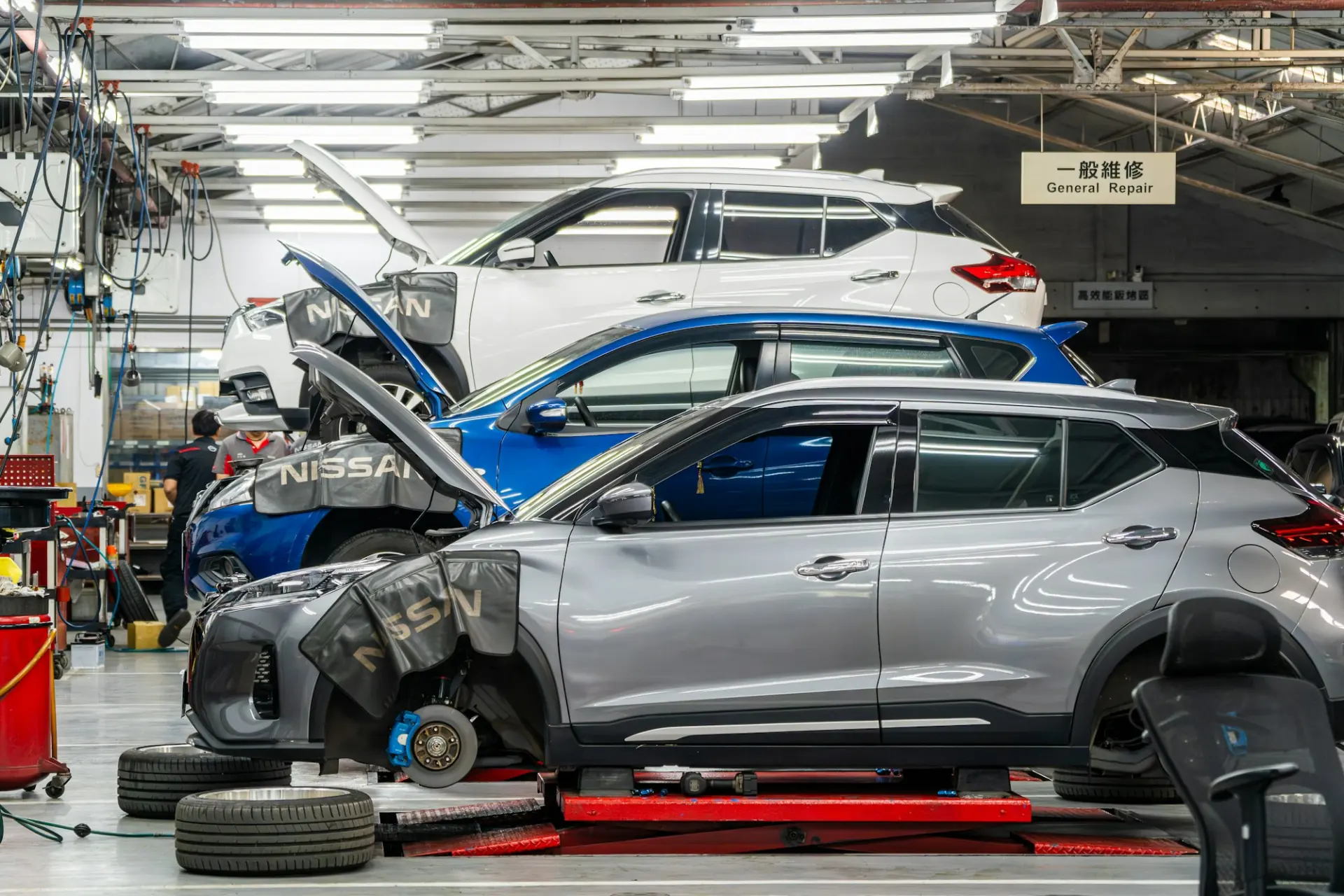
Decide first what work you'll take on, because the building, the kit, the permits and the people all follow from it. A full bodyshop sprays whole cars, so it needs a booth, a permit and air-fed breathing equipment. A SMART repairer doing small areas may need none of the permit work, and someone straightening and fitting panels may sublet the paint.
Then decide who you'll work for. Insurance work brings volume but comes with insurers' authorisations and, for approved repairers, their terms. Retail customers pay you directly. Trade work, preparing and spraying dealers' cars for resale, is another route: the Southampton bodyshop whose planning permission is quoted below does just that.
UK bodyshops
3,134
In 2019, down from 3,650 in 2010 (Trend Tracker).
With insurer or maker approvals
About 1,740
In 2020 (Trend Tracker).
Automotive vacancy rate
2.7%
Against 2.3% for the UK; worst in body and paint roles (IMI, 2026).
The market is consolidating. Steer Automotive Group, described as the UK's largest repair group, has bought a string of bodyshop groups since 2024, and Fix Auto UK said in October 2026 that it had signed its 150th franchised repair centre.
Set up the business
- 1
Choose sole trader or limited company
As a sole trader you're personally liable for all the business's debts; a limited company limits your liability to what you put in. A company needs at least one director, a shareholder, a registered office and a SIC code. Incorporating costs £100 online or £124 on paper (from 1 February 2026), and directors must verify their identity with Companies House. - 2
Register for tax
Sole traders register for Self Assessment by 5 October after the end of their first tax year. Companies register for Corporation Tax within three months of starting to trade: the main rate is 25%, or 19% on profits up to £50,000, with marginal relief between £50,000 and £250,000. - 3
Register for VAT
You must register once your taxable turnover over the last 12 months goes above £90,000, or you expect it to within the next 30 days. You can register voluntarily below that. Every VAT-registered business keeps digital records and files through software under Making Tax Digital. - 4
Register as an employer
Register with HMRC as an employer before you pay anyone, and set up a workplace pension (see below).
Sole traders also come into Making Tax Digital for Income Tax: from April 2026 with qualifying income over £50,000, from April 2027 over £30,000 and from April 2028 over £20,000.
Business rates relief helps a small unit. In England, a property with a rateable value of £12,000 or less gets 100% small business rate relief, tapering to nothing at £15,000. Scotland's Small Business Bonus Scheme gives 100% up to £12,000, tapering to nothing at £20,000, if your combined rateable value is £35,000 or less. Wales and Northern Ireland run their own schemes.
Find premises you're allowed to spray in
The building decides, more than anything, whether you can open. Councils treat vehicle body repair and paint spraying as general industrial use: in England that's use class B2. In two examples, Tendring (2017) and Southampton (2021) both granted change of use to B2 for body repair and spraying.
Expect conditions. Southampton's 2021 permission included:
- Working hours of 08:00 to 17:00 Monday to Friday and 08:00 to 13:00 on Saturday, never Sunday.
- Following a noise and odour report in full, including fitting flue extraction within two months.
- Storage for paint-spraying waste, and chemicals in a locked cabinet above flood level.
- No infiltration drainage, and no other B2 use without a new permission.
The booth's flue matters for planning too: the spraying permit guidance expects new solvent stacks to discharge more than 3 metres above the roof ridge of any building within 15 metres. Outside England the classes differ. Wales still has B1 and B2; in Scotland general industrial is Class 5; in Northern Ireland it's B3. Speak to the council's planning and environmental health officers before you sign a lease.
The spraying permit
In England and Wales, re-spraying road vehicles needs a Part B environmental permit from your council if you're likely to use 1 tonne or more of organic solvents in any 12 months. The rules come from Process Guidance Note 6/34(11), whose model permit sets out what the council will expect:
- All spraying in a fully enclosed booth under negative pressure.
- HVLP guns (at most 67.5 kPa), air-assisted airless, electrostatic, or guns that reach at least 65% transfer efficiency.
- Only labelled, VOC-compliant refinish products, thinned no more than the supplier allows.
- Booth emissions of particulates no more than 10 mg/Nm³, covered by the booth supplier's guarantee.
- Records kept for two years. Permits are reviewed about every eight years.
| Where | The rule | Fees |
|---|---|---|
| England | Part B permit from the council at 1 tonne of solvents a year | £362 to apply, then £228, £365 or £548 a year by risk (2017 scheme) |
| Wales | Part B permit from the council at 1 tonne a year | £355 to apply, then £223, £359 or £542 a year (2016 scheme). Rises were consulted on in 2026 |
| Scotland | Under SEPA's EASR regime from 1 November 2025, at 2 tonnes a year | Not confirmed |
| Northern Ireland | A Part C activity at 1 tonne a year, regulated by the district council or NIEA | Not confirmed |
Operating without a permit in England adds £71 to the application fee. SMART repair is very unlikely to reach the threshold.
VOC paint rules and hazardous waste
The VOC Regulations 2012 ban selling vehicle refinishing products over set limits of volatile organic compounds, and require the label to show the product's sub-category, limit and actual VOC content. Your paint supplier carries most of this, but the permit only lets you use compliant products.
| Product | Limit, ready to use |
|---|---|
| Preparatory and cleaning | 850 g/l |
| Pre-cleaner | 200 g/l |
| Body filler or stopper | 250 g/l |
| Surfacer, filler or general primer | 540 g/l |
| Wash primer | 780 g/l |
| Topcoat | 420 g/l |
| Special finishes | 840 g/l |
From PG6/34 Table 4.2, which mirrors Schedule 2 of the VOC Regulations 2012.
Hazardous waste
Much of what a paint shop throws away, such as waste paint and solvent, is likely to be hazardous waste. In England you no longer register as a producer (since April 2016), but you must classify the waste, store it safely, use registered carriers and permitted sites, fill in parts A and B of each consignment note, and keep a register for three years. In Wales, register with Natural Resources Wales if you produce or store more than 500 kg a year; it's free and lasts a year. Scotland and Northern Ireland use consignment notes under their own rules. Digital waste tracking, mandatory from 1 October 2026, applies to the sites that receive waste, not to you as a producer.
HSE rules: isocyanates, extraction and fire
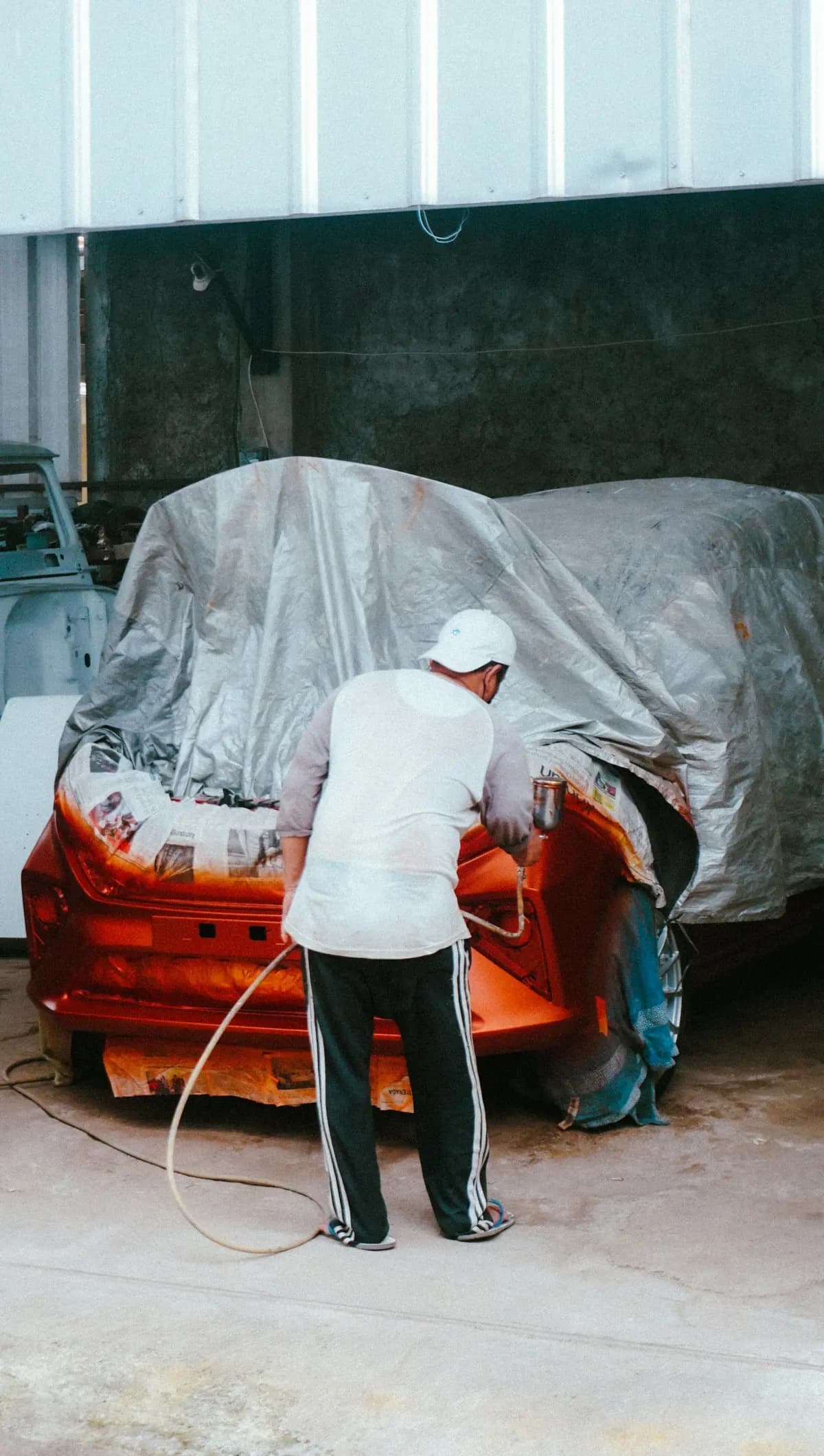
The 2-pack paints most bodyshops spray contain isocyanates, which HSE names as one of the main causes of occupational asthma in the UK. HSE's bodyshop guidance is specific:
- Spray in an extracted booth or room at slight negative pressure, never outdoors (except SMART work). Measure the booth's clearance time with a smoke or fog generator and mark it on the doors.
- Air-fed breathing equipment for sprayers, always, with a protection factor of 20 and a low-flow warning. Filtering masks aren't suitable. Test the breathing air at least every three months.
- Health surveillance: breathing checks for anyone liable to be exposed to isocyanates, skin checks for preparers and sprayers, and urine tests, usually once a year. The exposure limit is 0.02 mg/m³ over 8 hours.
- Extraction (LEV): thoroughly examined and tested at least every 14 months, with records kept for at least five years.
- DSEAR: identify flammable substances, classify areas where explosive atmospheres can occur, remove ignition sources, and plan for emergencies.
- Fire: a fire risk assessment, reviewed and, in England since October 2023, recorded in full whatever your size. Scotland and Northern Ireland have their own fire safety laws.
Occupational asthma, dermatitis and hand-arm vibration are reportable diseases under RIDDOR, and HSE names spraying among the dermatitis risks.
Insurance and trade plates
Employers' liability insurance is compulsory from your first employee, with at least £5 million of cover. You can be fined £2,500 for every day without it, and £1,000 for not displaying the certificate. A business that employs only close family may not need it.
To move unregistered or untaxed customers' cars on the road you'll want trade plates. Businesses that repair vehicles qualify, and DVLA needs a motor trade insurance certificate with the application. A licence costs £97.35 for six months or £177 for 12, and ends on 30 June or 31 December.
Beyond that, ask a broker about cover for customers' cars in your care, your premises and tools, and public liability. We found no published premiums for motor trade or bodyshop policies, so get quotes before you budget.
Equip the bodyshop
Equipment is the biggest cost after the building. Some UK list prices from October 2026:
| Equipment | List price |
|---|---|
| Spray booth and oven | No published prices |
| 7.5 kW screw compressor with receiver and dryer (CompAir) | £13,899 + VAT |
| Inverter spot welder, 13,000 A (GYS) | £11,667 |
| Pulse MIG welder (Telwin) | £3,199 |
| Two-post lift, 4,000 kg (Supalign) | £2,950 |
| Dent puller with variable upright (Sealey) | £1,099.95 + VAT |
| 20 tonne hydraulic body repair kit (Sealey) | £649.95 + VAT |
| Jig or bench system | No published prices |
| ADAS calibration equipment | No UK prices found |
Suppliers' list prices read 23 October 2026, before installation and electrical work. Prices without '+ VAT' don't say whether VAT is included. Booth and jig makers quote on request.
The Annual Investment Allowance lets you deduct up to £1 million of most plant and machinery, but not cars, from profits in the year you buy it. New main-rate plant bought from 1 January 2026 can also qualify for a 40% first-year allowance. Ask your accountant which suits you.
Hire and pay your team
Body repairers' median pay
£17.82 an hour
£35,512 a year, 2026 provisional (ONS ASHE, SOC 5232).
Paint technicians' median pay
£18.02 an hour
£37,445 a year; treat the annual figure with caution (SOC 5233).
National Living Wage
£12.71 an hour
Aged 21 and over, from 1 April 2026.
Skilled people are the hardest part to find. The IMI's March 2026 briefing put shortages at their worst in body repair and paint roles, with advertised pay for paint technicians up 28% in two years.
A technician costs more than their pay. In 2026-27, employer's National Insurance is 15% on earnings above £5,000 a year, and you must enrol staff earning over £10,000 in a pension, paying at least 3% of their earnings between £6,240 and £50,270 (8% in total with theirs). Staff get 5.6 weeks' paid holiday, which can include bank holidays.
| Cost | Amount |
|---|---|
| Pay | £35,512.00 |
| Employer's National Insurance: 15% of £30,512 | £4,576.80 |
| Pension at the 3% minimum: 3% of £29,272 | £878.16 |
| Total | £40,966.96 |
Before the Employment Allowance, which takes up to £10,500 a year off your employer's National Insurance bill. A company whose only employee paying it is the sole director can't claim.
Before you set your prices, work out what each hour you sell really costs: our labour rate guide builds it up step by step. For experienced staff, IMI Accident Repair Accreditation covers panel, paint and MET technicians, damage assessors and cosmetic repairers.
Apprenticeships
Growing your own technicians is often the only way to get them. England has three Level 3 apprenticeship standards for bodyshops, each typically 36 months with up to £15,000 of training funding: vehicle damage panel technician, vehicle damage paint technician, and vehicle damage mechanical, electrical and trim (MET) technician.
- For apprentices starting from 1 August 2026, the government pays all the training for apprentices aged 16 to 24 at employers who don't pay the apprenticeship levy, and 95% for those aged 25 and over.
- You and the training provider each get £1,000 for an apprentice aged 16 to 18 (or 19 to 24 with an education, health and care plan or care-leaver status).
- Non-levy employers also get a £2,000 hiring payment, in two instalments, for apprentices aged 16 to 24 starting from 1 October 2026.
- The apprentice minimum wage is £8.00 an hour, for apprentices under 19 or in their first year; after that they get their age rate.
Scotland, Wales and Northern Ireland run their own apprenticeship programmes, with different funding; check with Skills Development Scotland, the Welsh Government or ApprenticeshipsNI.
Finance the start
| Scheme | What it offers |
|---|---|
| Start Up Loans | £500 to £25,000 per person at a fixed 7.5%, repaid over one to five years, with no fees and up to 12 months of free mentoring. For businesses trading less than five years |
| Growth Guarantee Scheme | Loans, overdrafts, asset finance and invoice finance from lenders, up to £2 million, with a government guarantee to the lender, for businesses with turnover up to £45 million. An expansion announced on 13 July 2026 (a 70% guarantee, terms up to 10 years and a £54 million turnover cap) had no start date when we checked |
| Annual Investment Allowance | Up to £1 million of plant and machinery deducted from profits in the year you buy it |
Start Up Loans rose from 6% to 7.5% in April 2026; older guides still show 6%.
Keep enough cash to carry wages, rent and parts until money comes in. Insurers pay what they authorised, on their own timetable, and only once your invoice matches. Our guide to getting paid covers the excess, VAT and chasing what's owed.
Win your first work
You don't need to be on an insurer's network to repair insured cars, but customers who use their own repairer often pay for it. Three Financial Ombudsman decisions show typical policy wording:
| Insurer | What the policy said |
|---|---|
| Aviva (2025) | Customers can use their own repairer but get no courtesy car, may face delays and pay an extra £500 excess |
| West Bay (2024) | Two detailed estimates and the insurer's authorisation are needed, and it may pay no more than its approved repairer would have charged |
| LV (2024) | The insurer's agent inspected and authorised the estimate; delays came from the garage's incomplete estimate |
These are individual Financial Ombudsman decisions quoting real policies, not general rules.
- Send complete, well-photographed estimates so insurers can authorise them quickly.
- Build toward approvals. BSI says insurer networks, fleets and accident management firms typically ask for the BS 10125 Kitemark as a minimum. See our BS 10125 guide.
- Work for dealers and the trade, preparing and refinishing cars for resale.
- Earn honest reviews. Fake reviews and reviews you paid for without saying so are banned under the Digital Markets, Competition and Consumers Act 2024.
Set up your prices and paperwork
Set up your pricing and paperwork before the first car arrives:
- Your labour rate, from what your technicians and building cost: see our labour rate guide.
- Quotes that say clearly whether they're a quote or an estimate, with parts, labour and VAT: see our quote guide.
- Parts and paint pricing: see our parts and paint guide.
- A check-in record of every car's existing damage, invoices that show VAT and the excess, and your storage terms in writing.
Your start-up checklist
- Decide the work you'll do and who you'll do it for.
- Set up as a sole trader or limited company, and register for tax, VAT if you need to, and PAYE.
- Find a unit, and get planning permission for B2 use (or your nation's equivalent) before you sign.
- Apply for the spraying permit if you'll reach the solvent threshold.
- Install the booth, extraction and air-fed breathing equipment; arrange LEV testing and health surveillance.
- Do and record your fire risk assessment and DSEAR assessment; set up hazardous waste storage and a registered carrier.
- Arrange employers' liability, motor trade cover and trade plates.
- Hire your team, enrol them in a pension, and look at apprenticeships.
- Line up finance and enough cash to carry you until customers and insurers pay.
- Set your labour rate, quote and invoice formats, check-in routine and storage terms.