Why OEM procedures matter
A modern car is built from several grades of high-strength steel, aluminum, structural adhesives and rivets, with cameras and radar behind its glass and bumpers. How each part is joined, sectioned or replaced is set by the automaker, in repair procedures for each model and in position statements on topics such as scans, calibrations and used parts.
The estimating databases don't replace them: a labor time says how long an operation takes, not how to do it. Looking up the procedure for each repair, and keeping a copy with the job, is how a shop shows it repaired the car the way the automaker intended.
The John Eagle Collision verdict
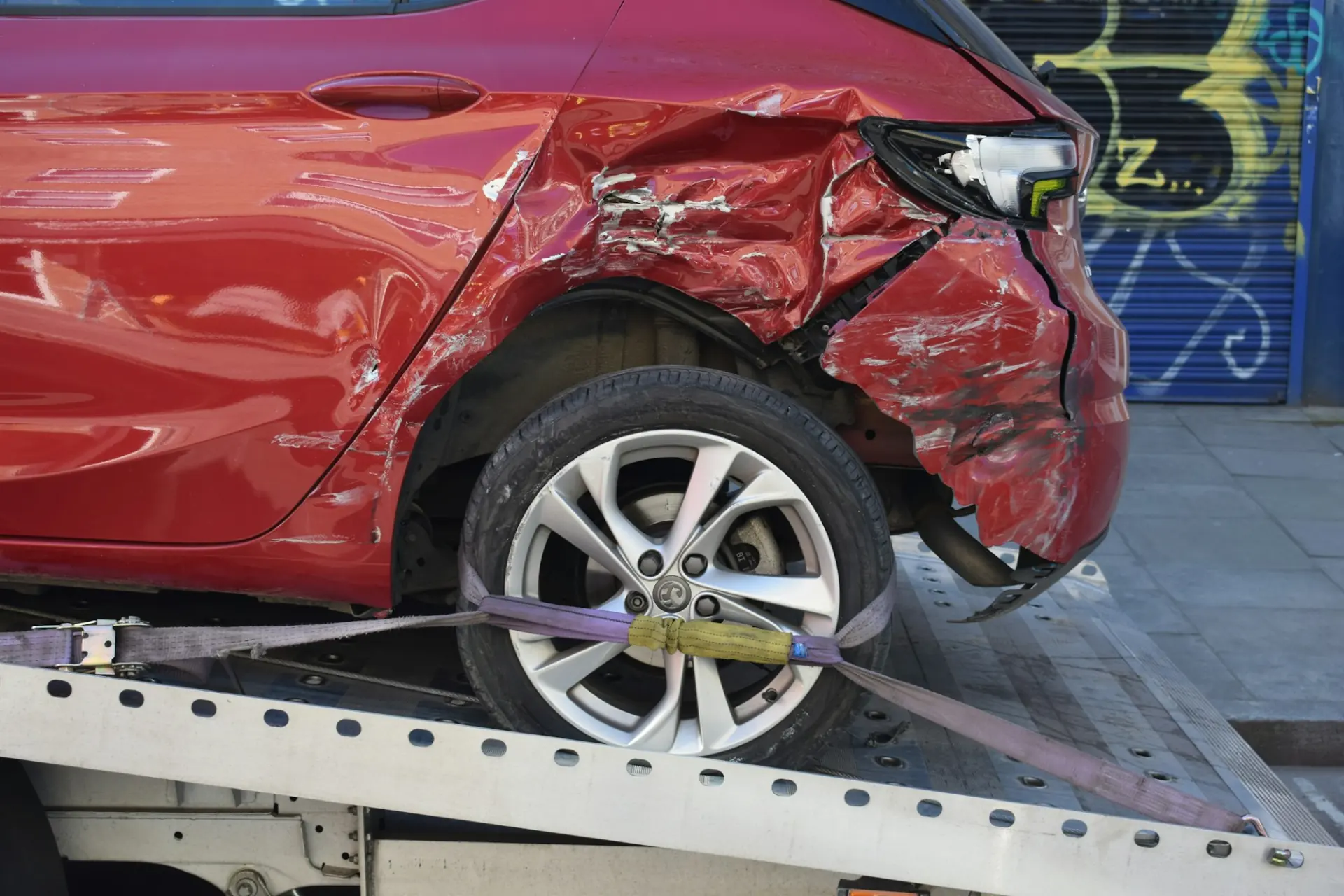
The case that made procedures the yardstick was Seebachan v. John Eagle Collision Center. In 2012 the Dallas shop repaired hail damage on a 2010 Honda Fit and bonded the replacement roof with adhesive instead of using the welds Honda's procedures called for. Matthew and Marcia Seebachan later bought the car used. In 2013 a pickup struck it, and they were trapped in the burning car with serious injuries.
The verdict
About $42 million
A Dallas County jury, October 2, 2017.
The shop's share
75%
About $31.5 million; the other driver was found 25% responsible.
What it turned on
The roof joint
Adhesive where Honda's procedure called for welds.
The shop later settled for an undisclosed amount. Since the verdict, the automaker's procedure is the standard a repair is measured against, and the shop that did the work carries the risk when it isn't followed.
Where to find the procedures
- The automakers' service information sites. Each sells access by the day, month or year. In a January 2023 list, short-term access of 24 to 72 hours cost $10 to $35 and a year $1,100 to $2,500, depending on the make. Tesla's repair manuals have been free since 2022.
- OEM1Stop, run by the OEM Collision Repair Roundtable, links to every automaker's site and position statements in one place.
- I-CAR's Repairability Technical Support portal is free. It has the automakers' position statements, a search for their calibration requirements by vehicle and an Ask I-CAR service. It can't host the automakers' copyrighted procedures, so it tells you where to find them.
Pre- and post-repair scans
A collision can set fault codes in a car's computers without lighting a warning on the dash. A pre-repair scan finds them so they go on the estimate; a post-repair scan confirms nothing is left before the car goes back. Automakers began requiring both in 2016:
| Automaker | What the statement says |
|---|---|
| Honda and Acura | All vehicles involved in a collision need a pre- and post-repair scan (2016) |
| Toyota, Lexus and Scion | A "Health Check" diagnostic scan before and after every repair on a vehicle damaged in a collision (first issued 2016, updated 2021) |
| Nissan and INFINITI | All 2008 and newer vehicles need pre- and post-repair scans with Nissan's CONSULT tool; a post-repair scan is recommended on older vehicles with an OBD2 port |
| Subaru | Model year 2004 and newer need pre- and post-repair scans after any collision beyond minor cosmetic damage (2020) |
Fiat Chrysler (now Stellantis) issued a similar statement in 2016. Check each automaker's current statement on I-CAR RTS or OEM1Stop before you rely on it.
Scanning is now routine on insurance work. In CCC's data for the first quarter of 2026, 89.8% of direct repair appraisals included a scan, and 74.8% of all appraisals. Scans done during the repair aren't included in the estimating databases' labor times, so they go on the estimate as their own lines.
ADAS calibration
Advanced driver assistance systems (ADAS), such as automatic emergency braking, lane keeping and adaptive cruise control, rely on cameras, radar and other sensors aimed to within fractions of a degree. When a repair removes or replaces a sensor or the part it sits on, such as a windshield, a bumper cover or a mirror, the automaker's procedure may call for a calibration. There are two kinds:
- Static: in the shop, with the car parked in front of targets set out to the automaker's measurements on a level floor.
- Dynamic: by driving the car under the conditions the automaker sets, such as speed, road markings and distance.
As AAA puts it, many sensors must undergo both. The procedure for the vehicle says which, and I-CAR's RTS portal has a search for each automaker's calibration requirements.
Estimates with a calibration
34.7%
In Enlyte's 2025 data, up from 12.1% in 2022.
At direct repair shops
40.6%
Of DRP appraisals in CCC's data, first quarter of 2026.
On the first estimate
About half
Only 47% across the industry in 2026; the rest came as supplements.
A calibration found late costs days. In CCC's 2025 figures, repairs with no calibration took about 13 days from keys in to keys out, with one about 15.5 days, and with several more than 17.
What calibration costs
In December 2023 AAA priced four common repairs on a 2023 Ford F-150, Nissan Rogue and Toyota Camry, at the automakers' list prices for parts and $75 an hour for body labor and $110 for mechanical labor:
| Repair | ADAS work | Share of the bill |
|---|---|---|
| Minor front collision | $1,540.92 | 13.2% |
| Side mirror replacement | $1,067.42 | 70.8% |
| Minor rear collision | $684.63 | 40.9% |
| Windshield replacement with camera calibration | $360.00 | 25.4% |
From AAA's study. Across the four repairs, ADAS work averaged 37.6% of the cost. A front radar sensor alone cost $500 to $1,300 and a front camera $600 to $800.
More recent data points the same way: in Enlyte's 2025 figures, estimates that included a calibration averaged $688 for it.
Doing it in-house or subletting
Shops either calibrate in-house or sublet the work to a dealer or a mobile specialist.
| In-house | Sublet | |
|---|---|---|
| Equipment | Targets, scan tools and software for each brand, and a level, well-lit bay with room around the car. A calibration vendor and a business broker both put a calibration bay at $75,000 to $150,000, plus software subscriptions | None, beyond a scan tool to find what's needed |
| People | A trained technician. I-CAR Gold Class shops that calibrate in-house need an ADAS Technician from their 2026 renewal; ASE's L4 test covers ADAS | Someone to book the work and check the report |
| Time | The car stays in your shop | The car may go to a dealer and back, or wait for the specialist |
| Paperwork | Your own calibration report | The specialist's report and invoice, kept with the repair order |
Equipment figures are estimates from Protech (January 2026) and CT Acquisitions (August 2026), neither showing its method.
Our guide to body shop certifications covers the training side, including the Gold Class ADAS Technician rule.
Getting paid for scans and calibrations
- Put the scans and calibrations on the first estimate, with the automaker's position statement or procedure that calls for them.
- Keep the pre-repair and post-repair scan reports, and the calibration report or the specialist's invoice, with the repair order.
- When teardown turns up a calibration the estimate missed, write the supplement straight away with the procedure and photos.
- Know your insurers' rules. State Farm requires its Select Service shops to check each VIN in Opus IVS's ADAS MAP ($3 a VIN, which the shop can't pass on) and caps calibration bills at its own price table. GEICO set standard scan and calibration pricing for its Auto Repair Xpress shops in 2024.
Right to repair and vehicle data
Since a 2014 industry agreement, automakers have sold independent shops the same service information and diagnostic tools their dealers get. The fight now is over the data cars send wirelessly, which only the automakers can read:
| Where | What it does | Where it stands |
|---|---|---|
| Massachusetts | Voters approved it in 2020 with about 75% of the vote. Cars from model year 2022 with telematics need a standard, open platform so owners and their chosen shops can get the car's data | Enforced since June 1, 2023; Subaru and Kia switched off telematics features in the state. A federal judge dismissed the automakers' challenge in February 2025, and the appeal was argued in February 2026. We found no ruling as of October 2026 |
| Maine | Voters approved it in 2023, and it took effect January 5, 2025, but the independent body it relied on was never set up. A 2026 law (LD 2211) replaces it with a Motor Vehicle Right to Repair Commission | The data platform is due by September 1, 2027, with the attorney general enforcing it. The automakers' 2025 lawsuit was paused while the law was rewritten |
| Federal | The REPAIR Act (2025) would give owners and shops access to vehicle data, tools and parts. In May 2026 a House committee approved a narrower version inside the Motor Vehicle Modernization Act, 48 to 1: it drops the telematics provisions, writes the 2014 and 2015 industry agreements into law and gives the FTC enforcement power | Neither had become law as of October 2026 |
No other state had passed a vehicle repair data law as of March 2026.
For now, budget for the automakers' service information and the scan tools your work needs, and watch Massachusetts and Maine: the rules there are likely to shape what comes next.