Three kinds of certification
“Certified” can mean three different things in a body shop, and a shop can hold all three:
| Kind | Who it covers | How you get it |
|---|---|---|
| I-CAR Gold Class | The shop | Train people in four roles to I-CAR's standard and keep them current every year |
| ASE certification | Individual technicians and estimators | Pass ASE's exams and show the work experience; retest every five years |
| OEM certification | The shop, for one automaker's vehicles | Meet the automaker's training, tool, equipment and facility standards and pass its audit |
None of them is a license to operate. Registering the business and the state and local permits a shop needs are separate; our guide to starting an auto body shop covers those. Certification is voluntary, and its value lies in the work it brings and the repairs it equips you to do properly.
I-CAR Gold Class shops
10,722
In I-CAR's 2025 Impact Report, up 7.1% on the year before.
I-CAR Platinum individuals
48,980
People trained to Platinum in their role, same report.
ASE retest cycle
5 years
Every ASE certification must be retested to stay current.
I-CAR Gold Class
I-CAR, the Inter-Industry Conference on Auto Collision Repair, is the industry's training body. Its Gold Class standard recognizes a shop whose people are trained for the work they do. To qualify:
- Four roles are covered: estimator, refinish technician, structural technician and non-structural technician. One person can cover up to two roles.
- Enough people are trained in each role. The number scales with the size of the shop; I-CAR's own example asks for 2 estimators, 3 non-structural, 4 structural and 4 refinish technicians.
- Everyone counted for a role is at ProLevel 2 or higher, I-CAR's second level of role training.
- The shop has foundation training in ADAS, electrical diagnostics and mechanical repair, from at least one person on the roster.
- Every structural technician is welding-trained, with the welding certification renewed every three years.
After that, the shop renews every year. People keep current by completing six course credits a year, from their role curriculum, vehicle-specific courses or I-CAR's Industry Training Alliance partners. New hires' training counts from the next renewal.
Platinum is for people
I-CAR Platinum recognizes one person in one role, such as estimator, structural technician or ADAS technician, once they complete ProLevels 1, 2 and 3. They keep it with six course credits a year and get 20% off I-CAR training. A Platinum technician counts toward your Gold Class roster.
What's changing in Gold Class
Two changes are coming in, both about the newer work modern cars bring:
- An ADAS Technician, if you calibrate in-house. Shops that do ADAS calibrations themselves must name an ADAS Technician for their 2026 renewal. That person completes ProLevels 1 and 2 and works toward ADAS Technician Platinum by the 2027 renewal.
- Mixed Attachment Methods, from July 1, 2027. This in-person structural course on rivet bonding and mixed joining becomes required for Gold Class renewal. It stays valid for three years.
If you sublet calibrations to a dealer or a mobile specialist instead, the ADAS Technician rule doesn't apply. Our guide to OEM procedures, scans and ADAS calibration covers the work itself.
ASE certification
The National Institute for Automotive Service Excellence (ASE) certifies individuals by exam. Its collision tests are:
| Test | Subject | Questions | Time |
|---|---|---|---|
| B2 | Painting and Refinishing | 55 | 90 min |
| B3 | Non-structural Analysis and Damage Repair | 55 | 90 min |
| B4 | Structural Analysis and Damage Repair | 50 | 75 min |
| B5 | Mechanical and Electrical Components | 50 | 75 min |
| B6 | Damage Analysis and Estimating | 50 | 75 min |
Scored questions, from ASE's test pages. The recertification versions are about half as long.
A technician certified in B2 to B5 is an ASE Certified Master Collision Repair Technician. B6 is the estimator's test and needs two years of damage analysis and estimating experience. ASE also asks for hands-on work experience before it certifies a technician, and says the amount can vary by test. ASE's advanced L4 test covers ADAS.
Every certification must be retested every five years. ASE's current fees are $34 to register per order and $62 a standard test, or $124 for an advanced test. Recertification tests are capped at $186 an order.
The Blue Seal for the shop
ASE's Blue Seal of Excellence recognizes a shop rather than a person. At least 75% of the technicians doing diagnosis and repair must be ASE certified, with at least one certified in each area of service you offer. If you employ full-time estimators, at least one must hold B6. It costs $235 to apply and $65 a year to renew.
How OEM certification works
OEM certification puts your shop in an automaker's collision network for its vehicles. Some automakers run their own program; others use a network administrator:
- OEC's Collision Performance Network, formerly Assured Performance, certifies shops for Stellantis (FCA) brands, Alfa Romeo, Hyundai, Genesis, Kia and VinFast in one network.
- CCC OEM Link has run Nissan, INFINITI and GT-R certification since early 2026, a network of about 2,000 shops.
- Ford has run its Certified Collision Network itself since 2019, with the yearly on-site assessment done by OEC's team. GM, Honda and Acura, Subaru and the luxury and EV brands have their own programs.
Most programs ask for some mix of the same things:
- I-CAR Gold Class as the base, plus the automaker's own courses.
- A specified list of tools and equipment, such as welders, rivet guns and measuring systems, and for some brands a separate aluminum repair area.
- Facility standards, checked by an audit when you join and regularly after.
- Following the automaker's repair procedures and, for some brands, using only its genuine parts.
- An annual fee, and for some brands a dealer who sponsors your shop.
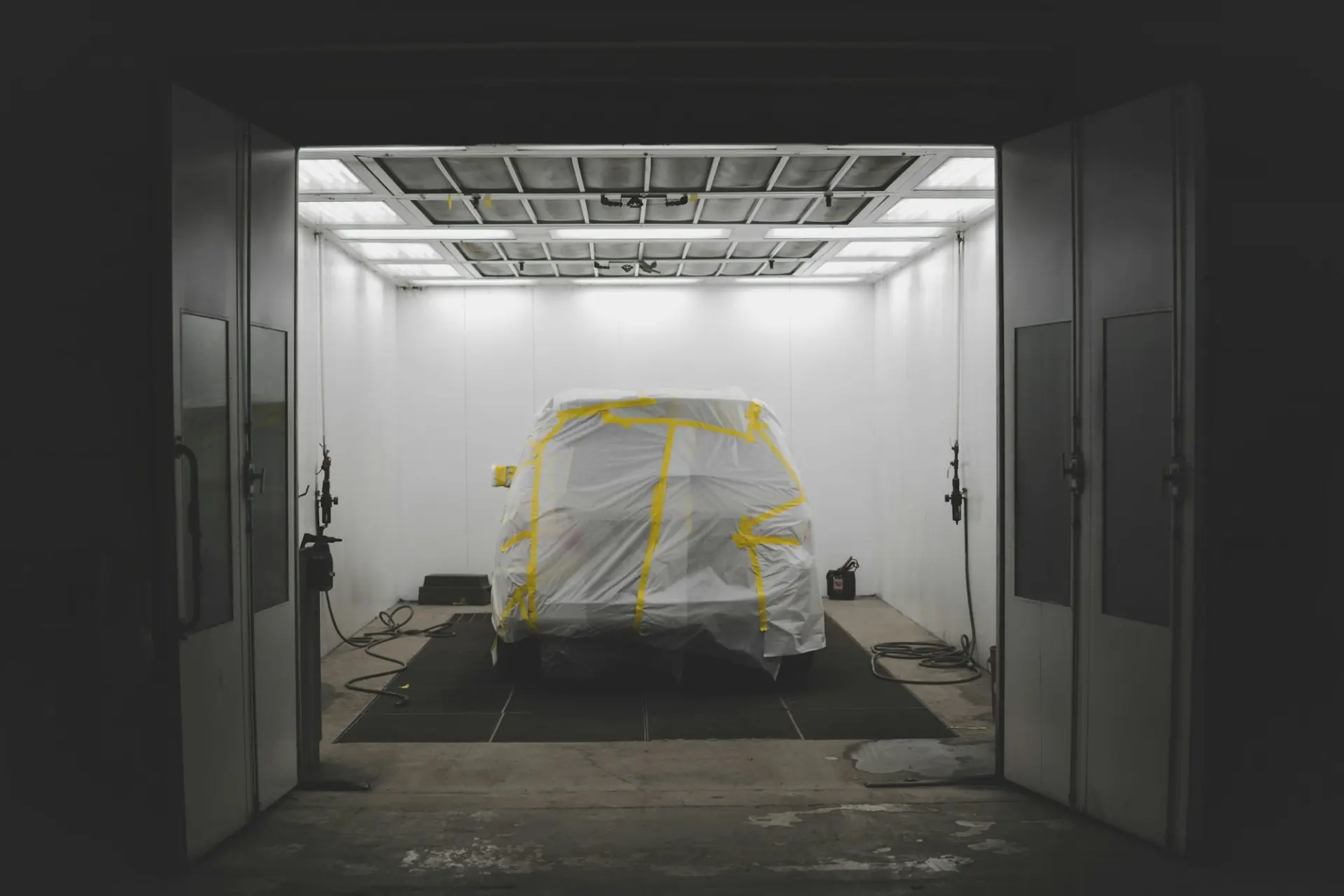
What the automakers ask for
Automakers share their requirements with applicants, and few publish them in full. This is what we could confirm from their own documents and the trade press, with the date of each source:
| Brand | Program | What we could confirm |
|---|---|---|
| Ford and Lincoln | Ford Certified Collision Network | Run by Ford since 2019 with a yearly assessment. Aluminum vehicles go to aluminum-certified shops with a segregated repair area, wet-mix dust extraction, a Ford-approved rivet gun and an aluminum MIG welder (2025). From 2026, Ford-paid warranty paint and body work goes to network shops |
| GM | GM Collision Repair Network | Built on I-CAR Gold Class, with four tiers: Basic, ICE Specialty (Cadillac aluminum, restricted CT6 and Corvette C8 structural parts), BEV and Fleet (2026) |
| Honda and Acura | ProFirst | Open to independents. Gold Class, Honda and Acura courses, tool and facility standards, a customer satisfaction system and a yearly audit; $2,700 a year at launch (2015) |
| Stellantis (FCA brands) | Through OEC's network | Six required I-CAR courses since 2022, including wiTECH scan tool training and driver assistance systems |
| Hyundai | Through OEC's network | Certification needs a sponsoring Hyundai dealer and a fee; shops without one can be Hyundai Recognized (2022) |
| Subaru | Subaru Certified Collision | Gold Class, Subaru courses and tools, genuine Subaru parts; open to independents from 2019; $3,200 a year (2018) |
| Toyota | Toyota Certified Collision Center | A Toyota dealer must own at least 15% of the collision business (2020), so an independent can't certify on its own |
| Mercedes-Benz | Certified Collision Repair | A sponsoring dealer, $3 million liability cover and genuine parts from that dealer. Base tier $5,500 to start, Elite (aluminum structural) $15,000, renewed every two years (2022) |
| BMW | Certified Collision Repair Center | Independents can join with a BMW center's sponsorship (since 2018); the shop pays for audits and uses only new original BMW parts |
| Tesla and Rivian | Their own approved networks | Structural parts, and Rivian's high-voltage parts, are sold only to network shops |
Where a year is shown, that's the date of the newest source we found; programs and fees may have changed since. Nissan and INFINITI now certify through CCC OEM Link.
What certification does for a shop
Here's what a shop can get from certification, and which programs offer each:
- Referrals from the automaker. Certified shops appear in the automakers' shop locators and apps: Ford's Collision Assistance, GM's network locator, Hyundai's Bluelink app, and Mercedes-Benz roadside assistance, which tows to certified centers.
- Parts other shops can't buy. Some structural parts are sold only to certified shops, including Mercedes-Benz aluminum structural parts, GM's CT6 and Corvette C8 parts, and Tesla's and Rivian's structural parts.
- Warranty work. From 2026, Ford- and Lincoln-paid warranty paint and body work must go to a Ford Certified Collision Network shop.
- Repair information. Some programs include the automaker's service information, or access at a reduced rate, as ProFirst and Ford's network have.
- A case to insurers. Insurers set their own training requirements for their direct repair programs. Allstate asks for industry training and certification standards, GEICO for at least one person per shop with S/P2 Collision training, and in 2017 State Farm made three I-CAR welding certifications mandatory for its shops. I-CAR says Gold Class helps meet network requirements like these.
Where to start
For most independent shops, this order makes sense:
- Gold Class first. Most OEM programs build on it, and it covers much of what insurers ask about training. Start with the roles you already have trained people in.
- ASE for your people. Pay for the tests as a benefit; B6 is worth it for anyone who writes estimates.
- OEM programs for the brands you see most. Check whether the brand needs a dealer sponsor or limits shops in your area, then price the tools, equipment, training and fees together.
- Keep the records. Audits ask for training records, equipment service logs and repair documentation: photos, the procedures followed, scan reports and parts used. Keep them with each repair order.